
Assistive Listening Devices for TV That Help

When the television volume keeps climbing but the words still sound muddy, the issue is often not loudness. It is clarity. Background music, fast dialogue, accents, and sound effects can make favorite programs tiring to follow, even for people who hear everyday conversation reasonably well. Assistive listening devices for TV are designed to bring speech closer and clearer without turning the whole room into a speaker.
For many adults and families, this is more than a convenience. Being able to follow a hockey game, news report, movie, or family show without repeated rewinding can make home life feel more relaxed and connected. The right solution depends on your hearing needs, your TV setup, and whether you wear hearing aids.
Why TV sound can be difficult to understand
TV audio mixes speech with music and environmental sounds. A character may speak quietly one moment, then a commercial or action scene may become suddenly loud. Standard TV speakers also tend to send sound across the room, where it can be affected by distance, room acoustics, and competing household noise.
Hearing loss can make this especially frustrating because it often affects the ability to separate speech from background sound. Simply increasing the volume may amplify everything equally, including the parts you do not want louder. That can leave one person uncomfortable while another still cannot understand the dialogue.
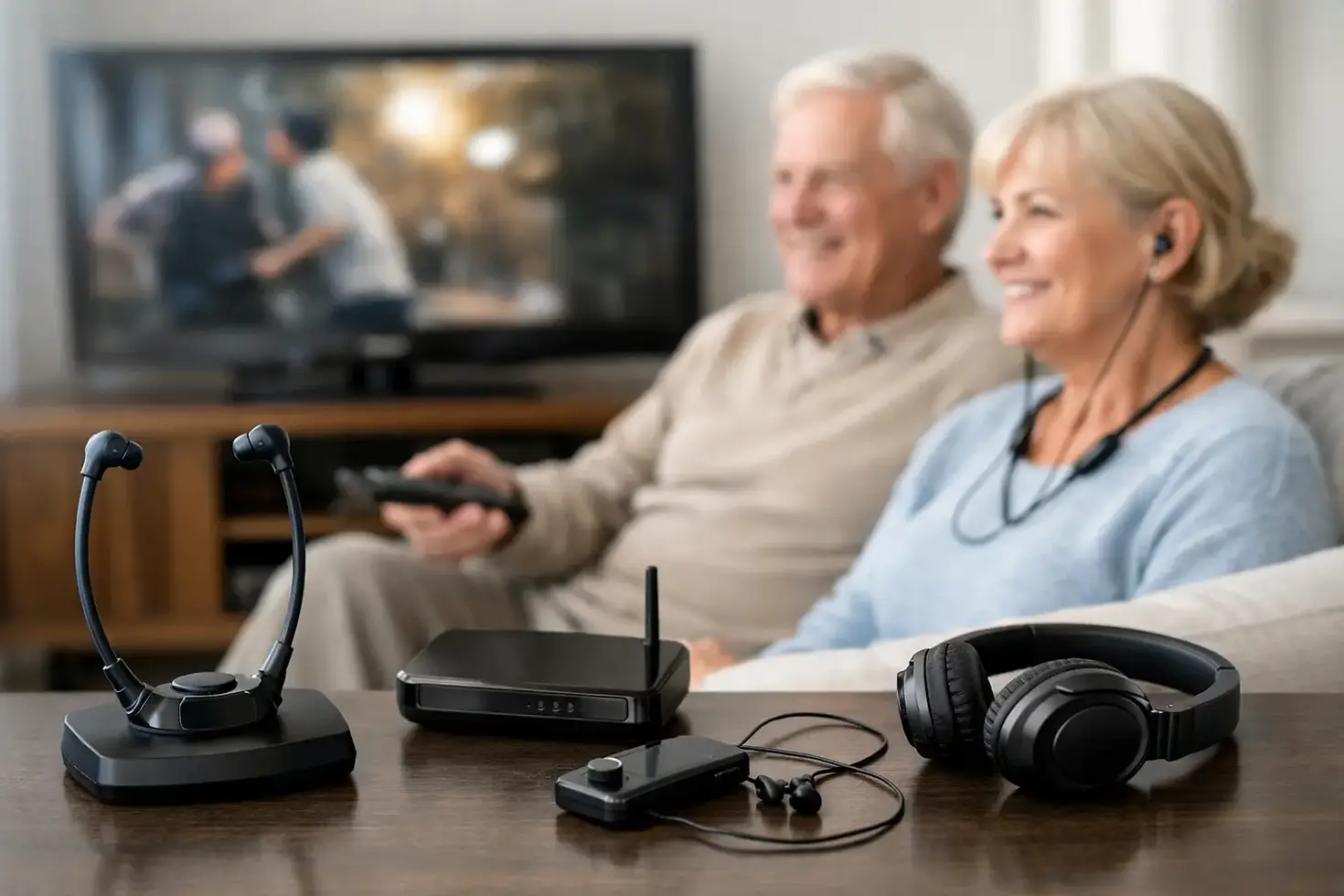
An assistive listening device changes how sound reaches the listener. Instead of relying only on room speakers, it can send audio directly to headphones, earbuds, a neck-worn receiver, or compatible hearing aids. This gives the listener more control and often improves speech understanding at a comfortable volume.
Types of assistive listening devices for TV
There is no single best device for every household. A good recommendation starts with how you watch TV, what you already use for hearing support, and who else shares the room.
Wireless TV headphones
Wireless headphones are a practical option for someone who does not wear hearing aids or who wants a dedicated TV solution. A transmitter connects to the television, and the listener wears headphones that receive the sound directly.
Many models have their own volume control, allowing one person to listen at a level that works for them while others use the TV speakers at a lower level. Comfort matters here. Over-ear styles may feel easier to wear for a full movie, while lighter designs may be preferable for shorter viewing. Battery life, charging simplicity, and the ability to adjust left and right volume independently can also make a meaningful difference.
The trade-off is that headphones can make it harder to hear a spouse, a doorbell, or someone speaking from another room. Some systems include an ambient sound setting, but it is worth discussing how much awareness of the room you need.
TV streamers for hearing aids
For people with compatible Bluetooth hearing aids, a TV streamer can send sound directly from the television to both hearing aids. This can provide a more natural listening experience because the audio is delivered through the same devices that are already programmed for your hearing needs.
A streamer may be especially helpful when speech clarity is the main concern. Your hearing aids can be adjusted to support speech while the TV signal is delivered clearly and consistently. Depending on the hearing aid model, you may be able to control volume through an app, a remote control, or the hearing aid buttons.
Compatibility is essential. Not every television, hearing aid, or Bluetooth connection works the same way. Some hearing aids connect directly to certain TVs, while others require a separate accessory. An audiologist can help confirm what will work before you purchase equipment that may not suit your system.
Personal amplifiers and neck loops
Personal amplifiers use a microphone and headphones or earbuds to make sound easier to hear. They may be useful in some settings, but they are not a replacement for properly fitted hearing aids when hearing loss is present. Their sound quality and ability to manage background noise can vary widely.
A neck loop is another option for people whose hearing aids have a telecoil setting. It sends audio magnetically to the hearing aids, often from a connected TV transmitter or receiver. This technology can still be an excellent choice for the right user, though it requires telecoil-compatible hearing aids and proper setup.
Soundbars and dialogue-enhancing speakers
A soundbar is not always considered a personal assistive listening device, but it can help a household improve TV listening. Some models offer dialogue enhancement, voice mode, or a center-channel speaker that makes speech more prominent.
This can be a good first step when more than one person has trouble hearing the TV. However, it does not provide the individual volume control or direct audio delivery that headphones and hearing aid streamers can offer. If one person needs significantly more support than another, a personal device is usually the better fit.
How to choose the right TV listening setup
Before choosing a device, think about the problem you are trying to solve. If you understand dialogue well with headphones but not through TV speakers, wireless headphones may be enough. If speech remains unclear even when sound is close to your ears, a hearing evaluation may be more useful than another volume control.
Your television connections matter, too. Newer TVs may have Bluetooth, optical audio, HDMI ARC, or headphone outputs. Older televisions may need an adapter or a device designed for analog connections. A system that looks simple in the box can become frustrating if it does not match your TV ports.
It also helps to consider your everyday routine. Do you want to watch with a partner who prefers the speakers on? Do you need to hear someone call for you from the kitchen? Will you remember to charge a headset each evening? The best device is one that fits naturally into your life, not one that adds another obstacle before you can enjoy a program.
A hearing evaluation can clarify the next step
Difficulty understanding TV dialogue is often one of the first signs people notice, but it should not be treated as a problem isolated to the television. If you are also asking people to repeat themselves, avoiding restaurants, or struggling during phone calls, a comprehensive hearing assessment can identify what is affecting your hearing and what support may help.
At Windsor Park Hearing Centre, recommendations are based on your hearing results, preferences, and budget. That may mean discussing hearing aid features, TV streaming accessories, or a simpler standalone device. Transparent options matter because not everyone needs the same technology or level of ongoing service.
If you already wear hearing aids, a visit can also help determine whether their programming needs adjustment. A small change to speech settings, noise management, or a dedicated TV program may improve comfort and clarity before you add any accessory.
Set up your device for better results
Even a well-chosen device can disappoint if it is not configured properly. Start by following the manufacturer instructions for connecting the transmitter or streamer to the TV. If the television has separate settings for speaker output, digital output, or Bluetooth audio, confirm that they are set to the correct option.
Once connected, test the system with a familiar program that includes normal conversation, music, and background sounds. Adjust volume gradually. If you use hearing aids, avoid setting the TV stream volume so high that it becomes harsh or fatiguing after 30 minutes.
Captioning can be a helpful partner to better audio, particularly for unfamiliar names, fast-paced shows, and films with heavy sound effects. Captions do not replace clearer hearing, but they can reduce the strain of trying to fill in missed words.
When to ask for professional help
Seek guidance if TV sound is distorted, if one ear seems noticeably worse than the other, or if you still struggle to understand speech through headphones. Sudden hearing changes, ear pain, drainage, dizziness, or a blocked feeling in the ear should also be assessed promptly. Sometimes earwax or another ear health concern is contributing to the problem.
A clear TV soundtrack should not require constant effort. With the right device and support, you can spend less time asking, “What did they say?” and more time enjoying the show with the people beside you.


Comments